
Knowledge Base


-


Choosing Gas Chromatography Columns: Key Parameters
In gas chromatography, column length, internal diameter, and film thickness critically determine efficiency, retention times, pressure requirements, and sample capacity. This article reviews how each parameter impacts chromatographic performance and provides practical selection guidelines—balancing resolution, analysis time, and cost—to help analysts choose optimal capillary columns for diverse applications. -


Uncovering Overlooked Factors Behind Abnormal Baselines
A stable, flat baseline is essential for accurate HPLC analyses, yet analysts may grapple with noise and drift. This article explores key baseline disturbances—sawtooth patterns, pulsations, chaotic fluctuations, and drift—pinpoints their root causes, and offers precise remedies. A real-world case study demonstrates systematic troubleshooting to restore baseline integrity. -
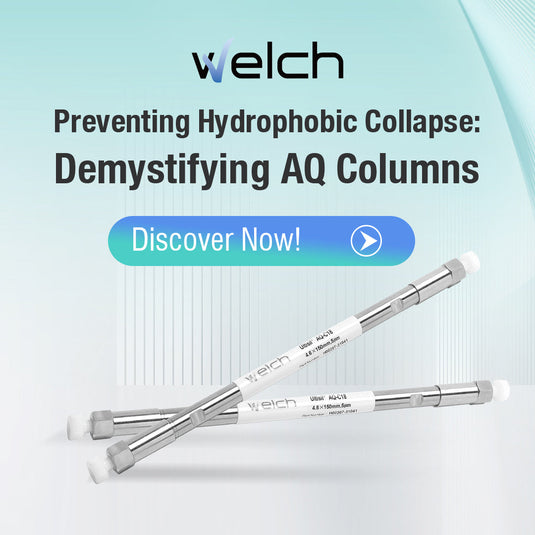

Preventing Hydrophobic Collapse: Demystifying AQ Columns
Struggling with weak retention of polar compounds in RP‑HPLC? Discover how Ultisil® AQ‑C18 delivers reliable performance under 100% aqueous conditions in this article. Enhance your analyses with stable retention and extended column life. -
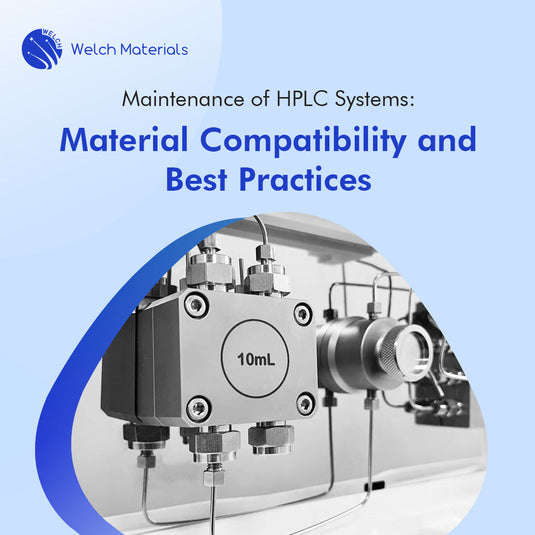

Maintenance of HPLC Systems: Material Compatibility and Best Practices
Maintaining an HPLC system requires careful consideration of material compatibility, from 316L stainless steel pump heads to PEEK tubing. This article examines real‑world cases, compares flow‑path materials, and outlines practical cleaning and maintenance practices to safeguard analytical accuracy, prolong instrument life, minimize costly downtime, and prevent unexpected failures. -


The Shield of Preparative Liquid Chromatography: Prep In-Line Filter
Prep in-line filters play a crucial role in maintaining the performance and longevity of preparative chromatography systems. This article explores how these compact devices prevent clogging, reduce wear, and protect columns—acting as a reliable shield for your purification workflow. -


Sugar Columns in Series: Empowering Superior Separation Performance in Sugar Analysis
This article explores how using Xtimate® Sugar-H and Sugar-Ca columns in series can significantly enhance resolution in sugar analysis. With real application cases in fermentation broth and pharmaceutical solutions, it demonstrates improved separation performance while maintaining safe pressure levels—offering a practical solution for challenging HPLC sugar separations. -
![[Readers Insight] Stop Being a Lab Robot: Mastering National Standards in HPLC Analysis](//www.welch-us.com/cdn/shop/articles/lab-robot-1080_535x.webp?v=1773652470)
![[Readers Insight] Stop Being a Lab Robot: Mastering National Standards in HPLC Analysis](//www.welch-us.com/cdn/shop/articles/lab-robot-1080_345x345@2x.webp?v=1773652470)
[Readers Insight] Stop Being a Lab Robot: Mastering National Standards in HPLC Analysis
Executing HPLC methods mechanically limits your potential as a chromatographer. This article breaks down an example method to show how understanding analyte chemistry, matrix effects, and solvent roles empowers you to troubleshoot and optimize, not just follow. -


Advanchrom HIC-Butyl FAQ: Linker Stability, Sample Handling, Column Treatment…
This Q&A recap from our May 22 webinar covers essential questions on ADC analysis using Advanchrom HIC-Butyl columns, with expanded expert responses offering deeper insights into best practices and technical considerations. -


Welch Columns in the Spotlight: Shining Stars of the 2025 Edition of the Chinese Pharmacopoeia
Discover Welch HPLC columns featured in the 2025 Chinese Pharmacopoeia, with applications and specs for pharmaceutical analysis. -
![[Readers Insight] How to Quickly Establish Robust HPLC Analytical Methods: A 5-Step Expert Guide](//www.welch-us.com/cdn/shop/articles/webp_535x.webp?v=1773652322)
![[Readers Insight] How to Quickly Establish Robust HPLC Analytical Methods: A 5-Step Expert Guide](//www.welch-us.com/cdn/shop/articles/webp_345x345@2x.webp?v=1773652322)
[Readers Insight] How to Quickly Establish Robust HPLC Analytical Methods: A 5-Step Expert Guide
This practical article guides new chromatographers through five essential steps to build robust HPLC methods: structural analysis, solvent selection, signal enhancement, elution optimization, and method validation. -
![[Readers Insight] Pursuing Excellence in Pharmaceutical Quality Control: Best Practices and Insights for Laboratories](//www.welch-us.com/cdn/shop/articles/customer-insigh_43ccb207-65ea-4941-9000-8f9f08c0158c_535x.webp?v=1773652291)
![[Readers Insight] Pursuing Excellence in Pharmaceutical Quality Control: Best Practices and Insights for Laboratories](//www.welch-us.com/cdn/shop/articles/customer-insigh_43ccb207-65ea-4941-9000-8f9f08c0158c_345x345@2x.webp?v=1773652291)
[Readers Insight] Pursuing Excellence in Pharmaceutical Quality Control: Best Practices and Insights for Laboratories
In this article, one of Welch’s long-term customer shares their practices and insights on pharmaceutical laboratory quality control in both HPLC and GC, along with their firsthand experience of Welch’s HPLC columns. -
![[Readers Insight] Why “Peak Area” is Used for Quantification in Chromatography](//www.welch-us.com/cdn/shop/articles/1080-peak-area_f6678897-c590-421a-8ec7-2e3575daa4fd_535x.webp?v=1773652231)
![[Readers Insight] Why “Peak Area” is Used for Quantification in Chromatography](//www.welch-us.com/cdn/shop/articles/1080-peak-area_f6678897-c590-421a-8ec7-2e3575daa4fd_345x345@2x.webp?v=1773652231)
[Readers Insight] Why “Peak Area” is Used for Quantification in Chromatography
Peak area is the preferred metric for quantification in chromatography due to its consistency across variable peak shapes and resistance to signal distortion. Unlike peak height or volume, it offers reliable integration even with minor peak deformation or interference, making it the most robust choice in routine analysis.


![[Readers Insight] Stop Being a Lab Robot: Mastering National Standards in HPLC Analysis](http://www.welch-us.com/cdn/shop/articles/lab-robot-1080_535x.webp?v=1773652470)
![[Readers Insight] Stop Being a Lab Robot: Mastering National Standards in HPLC Analysis](http://www.welch-us.com/cdn/shop/articles/lab-robot-1080_345x345@2x.webp?v=1773652470)


![[Readers Insight] How to Quickly Establish Robust HPLC Analytical Methods: A 5-Step Expert Guide](http://www.welch-us.com/cdn/shop/articles/webp_535x.webp?v=1773652322)
![[Readers Insight] How to Quickly Establish Robust HPLC Analytical Methods: A 5-Step Expert Guide](http://www.welch-us.com/cdn/shop/articles/webp_345x345@2x.webp?v=1773652322)
![[Readers Insight] Pursuing Excellence in Pharmaceutical Quality Control: Best Practices and Insights for Laboratories](http://www.welch-us.com/cdn/shop/articles/customer-insigh_43ccb207-65ea-4941-9000-8f9f08c0158c_535x.webp?v=1773652291)
![[Readers Insight] Pursuing Excellence in Pharmaceutical Quality Control: Best Practices and Insights for Laboratories](http://www.welch-us.com/cdn/shop/articles/customer-insigh_43ccb207-65ea-4941-9000-8f9f08c0158c_345x345@2x.webp?v=1773652291)
![[Readers Insight] Why “Peak Area” is Used for Quantification in Chromatography](http://www.welch-us.com/cdn/shop/articles/1080-peak-area_f6678897-c590-421a-8ec7-2e3575daa4fd_535x.webp?v=1773652231)
![[Readers Insight] Why “Peak Area” is Used for Quantification in Chromatography](http://www.welch-us.com/cdn/shop/articles/1080-peak-area_f6678897-c590-421a-8ec7-2e3575daa4fd_345x345@2x.webp?v=1773652231)