
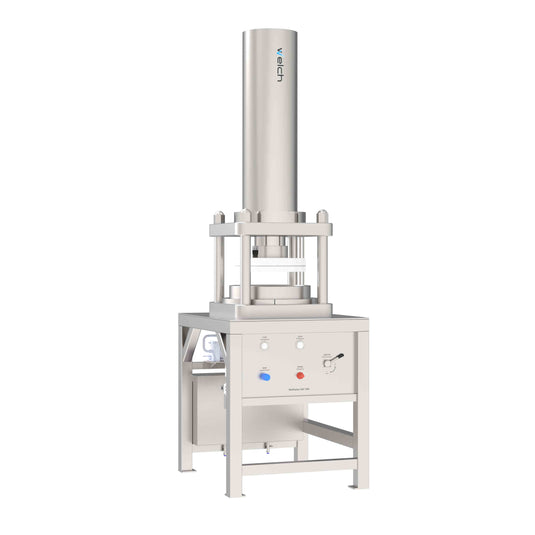
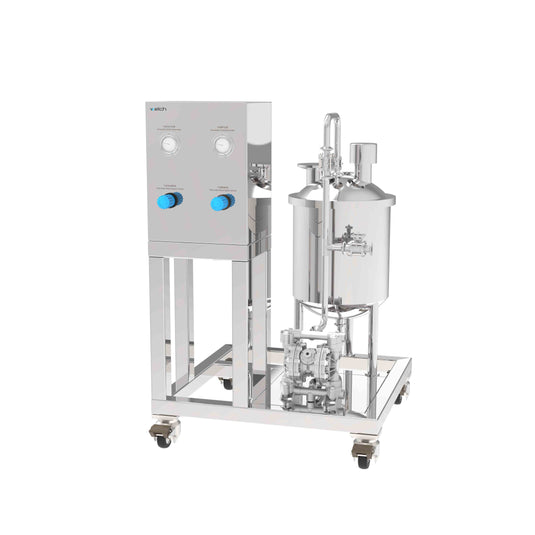
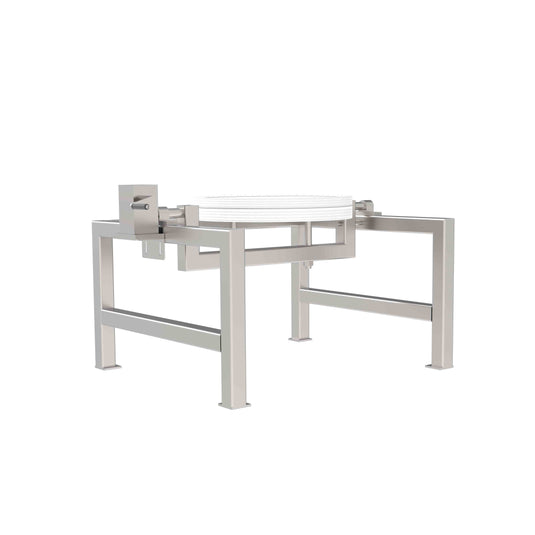
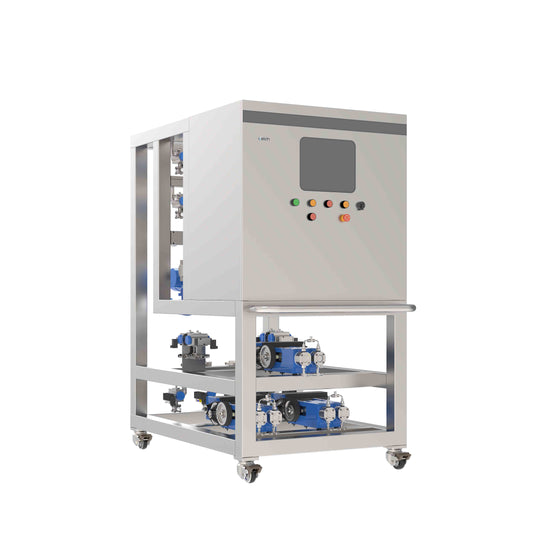
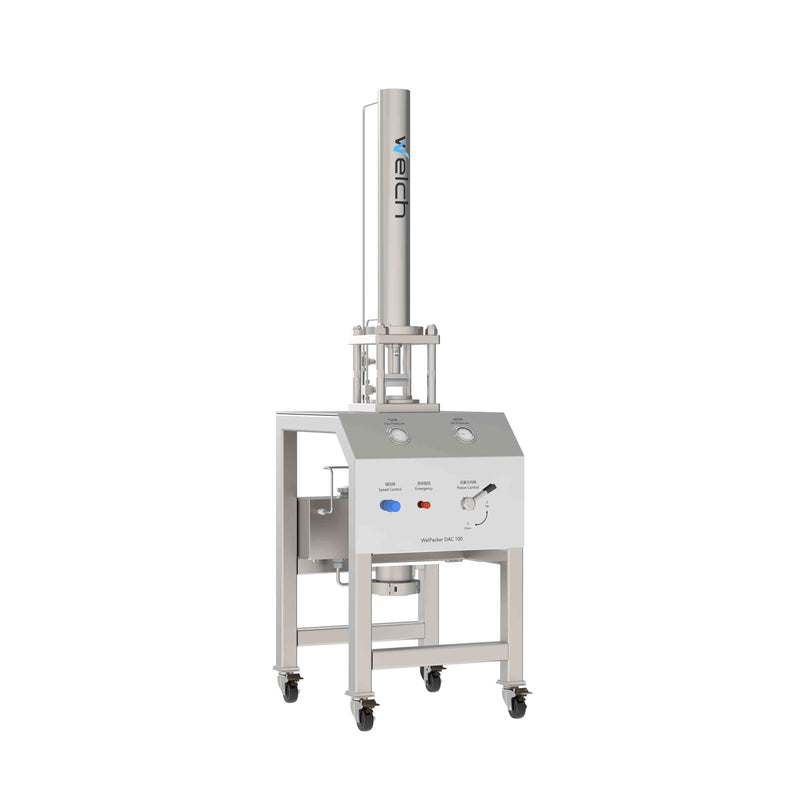
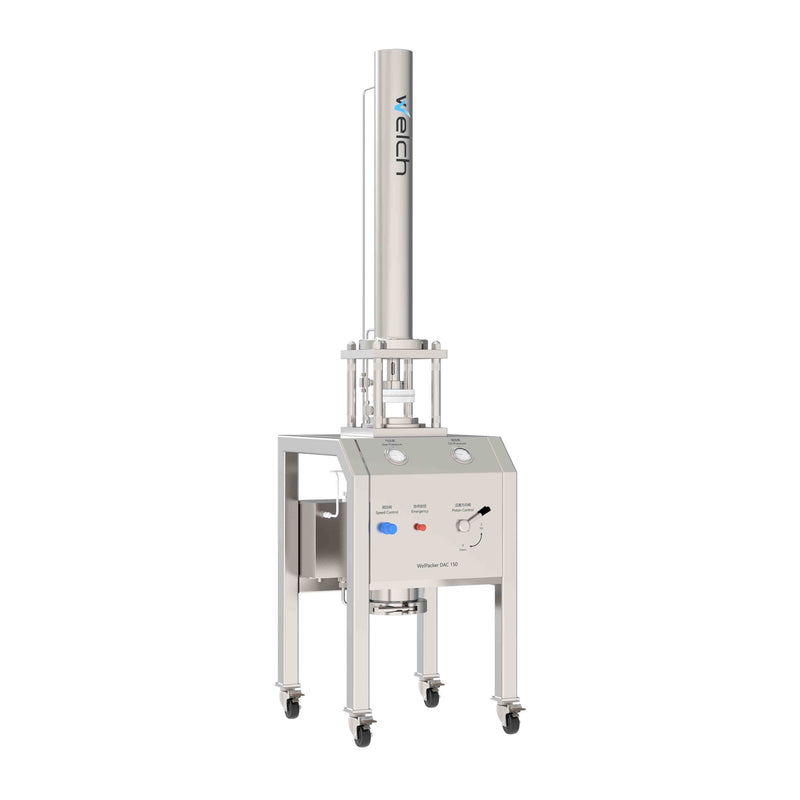
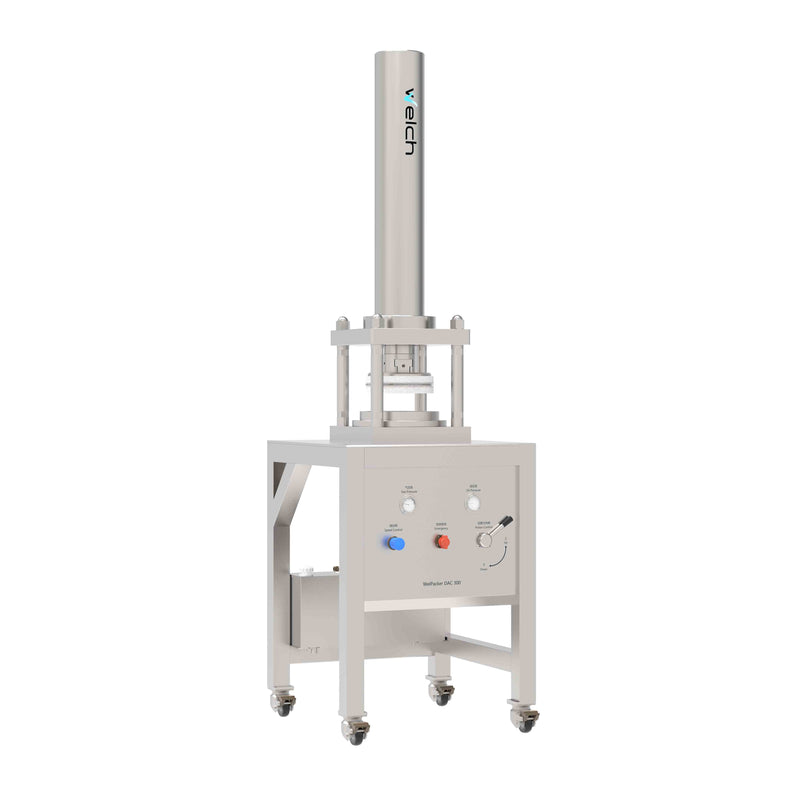
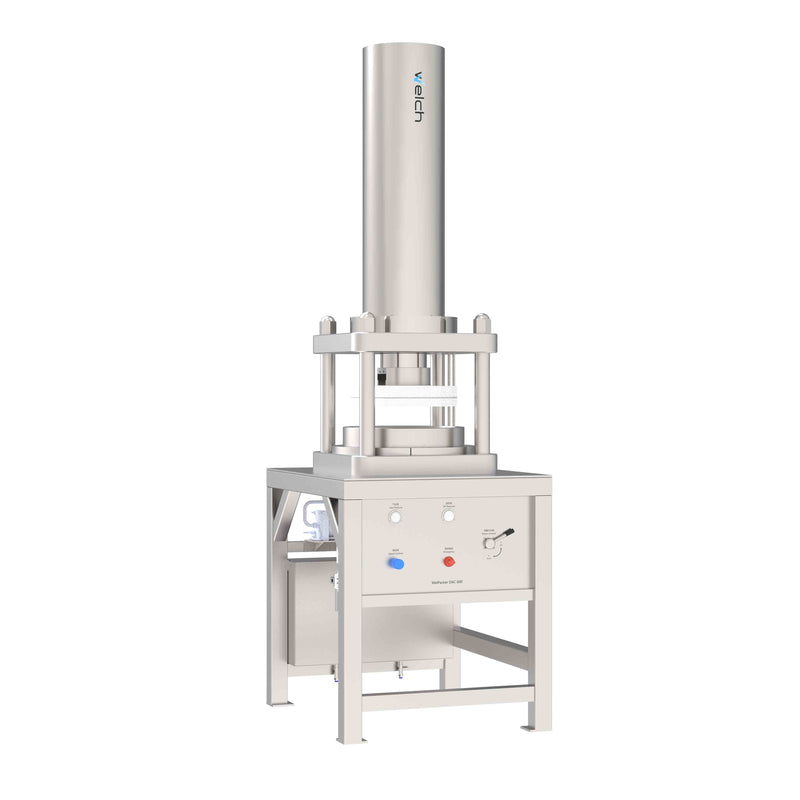
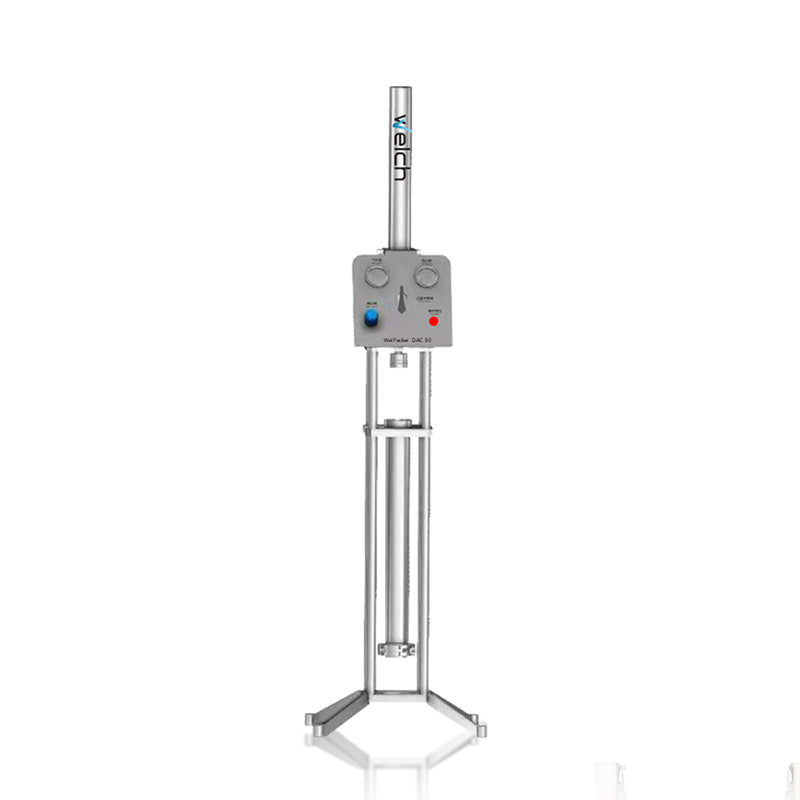
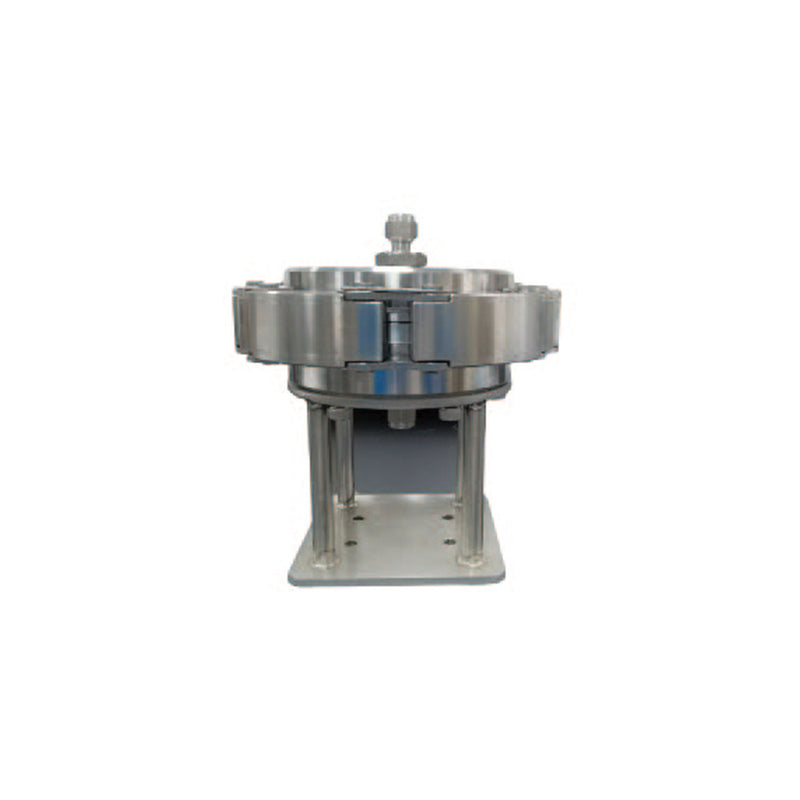

WelPacker DAC: Your Best Teammate in Purification
Key Features and Advantages
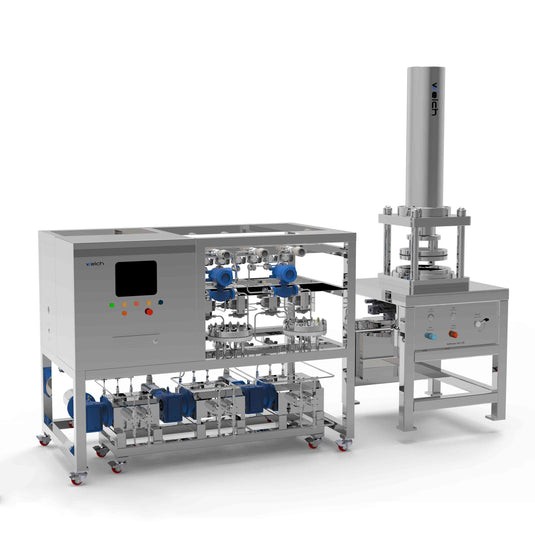
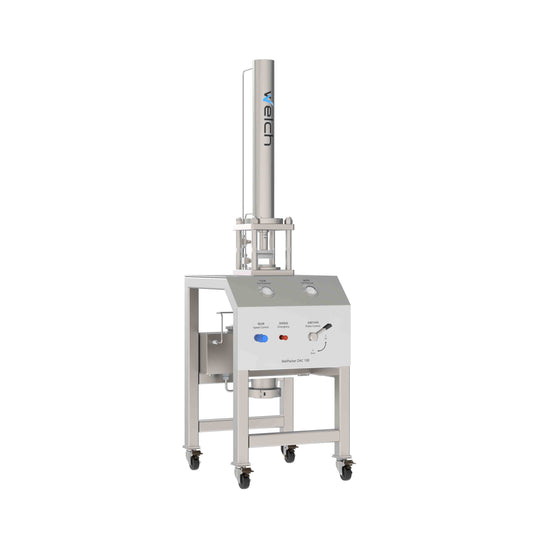
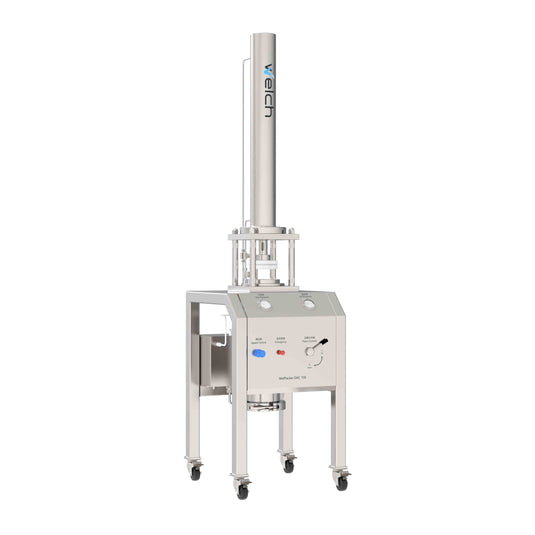
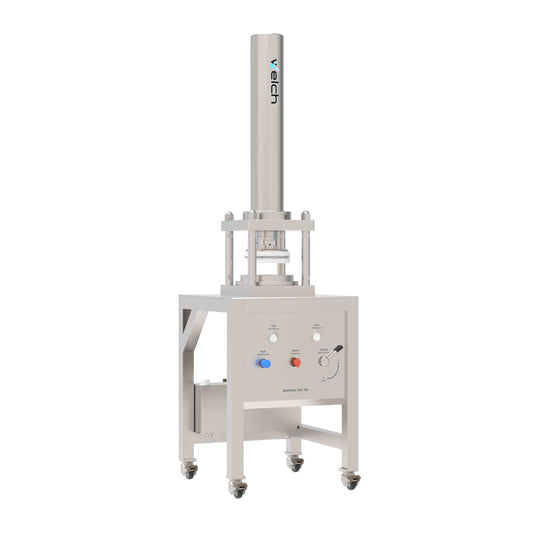
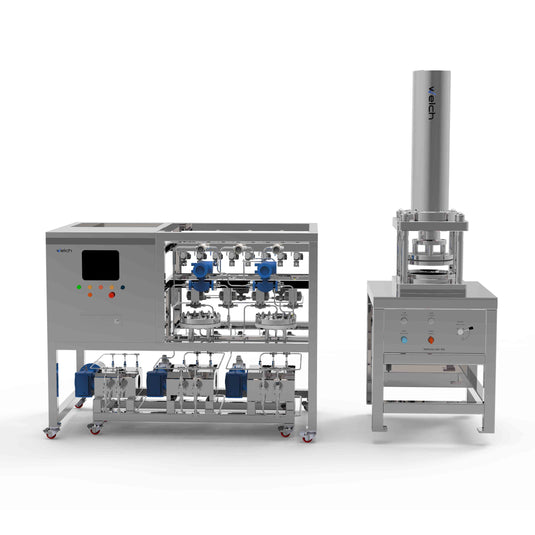
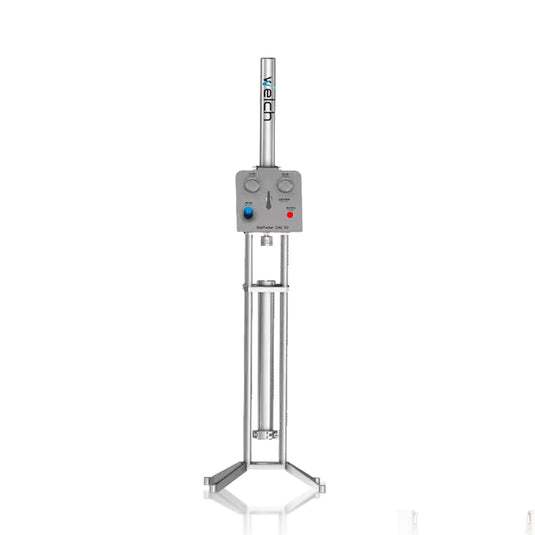
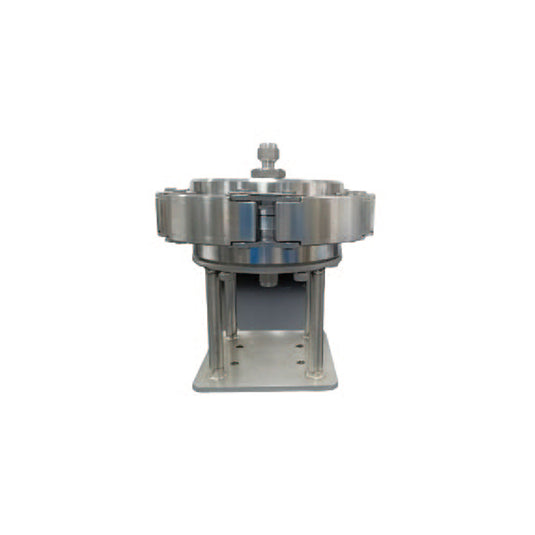
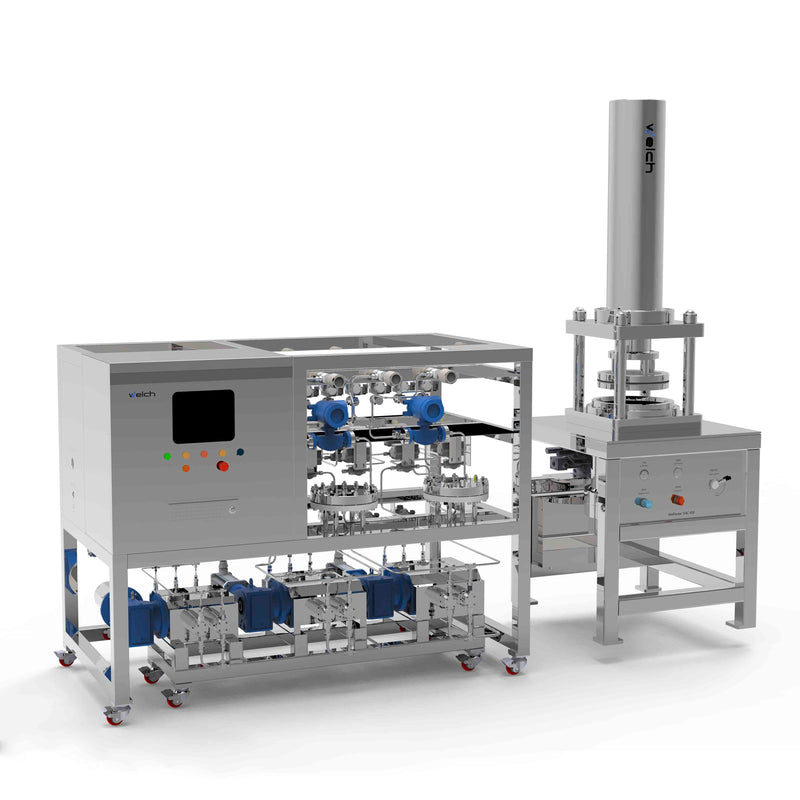
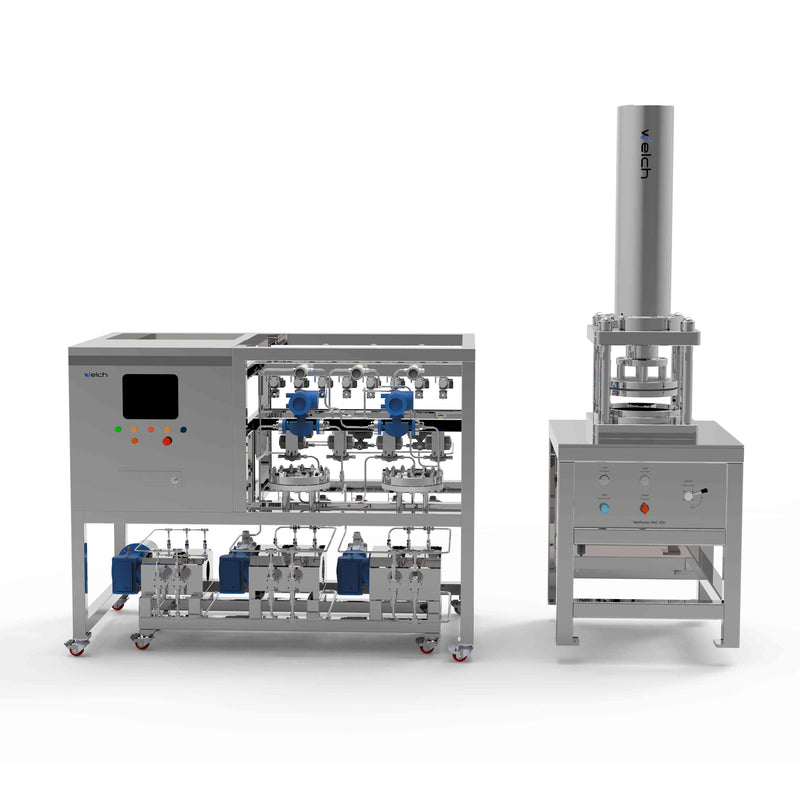
When high purity, exceptional reproducibility, and long-cycle stable production are paramount, the WelPacker DAC from Welch Materials stands out as the professional choice.
Advanced Material Compatibility and Safety
All components in contact with solvents are constructed from 316L stainless steel and PTFE seals. This premium material selection ensures complete resistance to organic solvents, zero sample adsorption, and zero chemical leaching. Consequently, the system fully aligns with Good Manufacturing Practice (GMP) standards and stringent regulatory compliance.
Solutions for Hazardous Environments
For processes involving large volumes of flammable solvents—such as methanol, ethanol, or ethyl acetate—or for operations housed within explosion-proof environments, Welch Materials offers the WelPacker Ex-proof DAC. This specialized variant guarantees maximum safety and regulatory compliance in high-risk industrial environments.

Integrated Column Protection
The system features an integrated inline filter that serves as an invisible shield for your process. It effectively prevents clogging and safeguards the column bed from particulate contamination, further extending the operational life of the stationary phase.
System Highlight: The WelPacker DAC provides seamless linear scale-up capabilities from pilot optimization to full industrial-scale manufacturing, making it an adaptable asset across varying production volumes.
Pack DAC Columns in Four Steps
Main article: An Essential Guide to Efficiently Packing DAC Columns
Step 1: Calculation
Calculating the required use of packing material and slurry is the first step in packing a highly efficient DAC column. The column is a cylinder, so its volume V is calculated by V = 3.14 × r2 × L, where r is the internal radius and L is the length (both in cm). The packing material mass M is then calculated by M = ρ × V × 1.1, where ρ is the bulk density in g/mL, and the factor 1.1 is due to compression.
For example, a 50 mm DAC packing 250 mm bed height of 10 µm C18 material (with a bulk density of 0.56 g/mL) requires approximately 302 grams of the packing material. (See the following table.)
| DAC Diameter (mm) | Packing Material Mass (g) |
|---|---|
| Packing material: 10 µm C18 (0.56 g/mL) | |
| 50 | 302 |
| 100 | 1,209 |
| 150 | 2,720 |
| 200 | 4,836 |
| 300 | 10,880 |
| 450 | 24,480 |
| 500 | 30,223 |
| 600 | 43,520 |
| 800 | 77,370 |
| 1000 | 120,000 |
For the slurry (most commonly isopropanol), its volume is usually twice the packing material mass (e.g. 300 g of packing material = 600 mL of slurry solvent).
Step 2: Cleaning and Preparation
Proper cleaning and preparation ensure optimal DAC performance. This includes removing oil and dust from the inner walls of the column tube, ultrasonicating sieve plates to remove clogs, cleaning distributors, seals, and other components that would be in contact with the mobile phase.
(WelPacker DAC employs H-tree distributors to ensure uniform fluid distribution, achieving symmetric chromatographic peaks.)
After cleaning, all components must be dried thoroughly, and suitable and stable gas source must be prepared before assembly.
Step 3: Packing Material Slurrying
Key notes in slurry preparation:
- Use inert containers, filling up to no more than 2/3 of their capacity.
- Mix using ultrasonic and mechanical stirring simultaneously for ~30 minutes. (Ultrasonication not applicable to fragile materials)
- Ensure a moderate slurry viscosity to avoid packing settling.
- For DACs of 300 mm or below, manual stirring can be applied; for above, a mixer is recommended.
- Avoid damaging packing materials. Extensive shear force or ultrasonication time may cause the packing to break, adding up to column pressure.
Step 4: DAC Packing
Clean all components (inner wall, piston, bottom cap, etc.) with isopropanol such that the inner wall is clean and shiny, and no residual contaminants exist. If clogs persist on the piston or bottom cap, soak in 1 M sodium hydroxide for 12 hours, followed by thorough rinsing for 1 hour with ultrapure water, then perform ultrasonic cleaning for 3 ~ 6 times (10 ~ 15 minutes each). Ensure the final rinse has a neutral pH (~7) after cleaning.
Assembly procedure:
- Prepare slurry solvent based on the packing material.
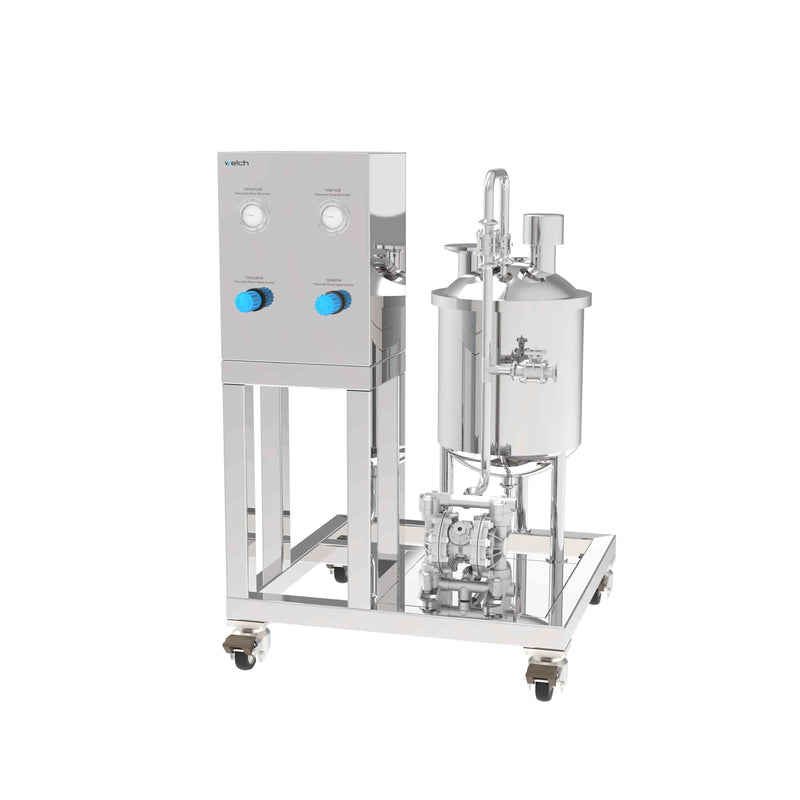
- Configurate an appropriate pneumatic hydraulic pump (based on the ratio of hydraulic pressure and column pressure of the DAC model). Adjust the air pressure to an appropriate value, and compress the packing quickly (for smaller DAC models, it is recommended to compress the packing within 30 seconds to 1 minute until you hear the sound of the column bed being compressed).
Note: The mechanical strength of packing materials varies significantly, and the packing’s pressure tolerance should be verified before column loading. Within the packing's tolerance limits, higher column pressure results in a denser bed and better column efficiency. - After the slurry liquid has been discharged, let the column stand for 30 minutes until the bed is stabilized. For better column efficiency, pass an additional column volume of slurry through the column to compress the bed, then replace it with three column volumes of mobile phase before testing column efficiency.

Best Practices for DAC Maintenance
To ensure long-term performance and system longevity, a strict maintenance regimen should be implemented:
- System Flushing: The column must be thoroughly flushed after every run. If a buffered salt mobile phase was utilized, flush the system with a high-purity aqueous phase first to prevent precipitation, followed by a flush with a high-concentration organic phase.
- Operational Checks: Maintain a continuous gas supply during operation. When repacking the column, ensure thorough cleaning of the column tube as well as both the upper and lower frits. Regularly check the condition of the hydraulic oil too.
- Periodic Component Inspections: Every six months, perform a mandatory inspection of the frits, sealing rings, and hydraulic oil.
WelPacker DAC: Your Best Teammate in Purification
Key Features and Advantages
When high purity, exceptional reproducibility, and long-cycle stable production are paramount, the WelPacker DAC from Welch Materials stands out as the professional choice.
Advanced Material Compatibility and Safety
All components in contact with solvents are constructed from 316L stainless steel and PTFE seals. This premium material selection ensures complete resistance to organic solvents, zero sample adsorption, and zero chemical leaching. Consequently, the system fully aligns with Good Manufacturing Practice (GMP) standards and stringent regulatory compliance.
Solutions for Hazardous Environments
For processes involving large volumes of flammable solvents—such as methanol, ethanol, or ethyl acetate—or for operations housed within explosion-proof environments, Welch Materials offers the WelPacker Ex-proof DAC. This specialized variant guarantees maximum safety and regulatory compliance in high-risk industrial environments.
Integrated Column Protection
The system features an integrated inline filter that serves as an invisible shield for your process. It effectively prevents clogging and safeguards the column bed from particulate contamination, further extending the operational life of the stationary phase.
System Highlight: The WelPacker DAC provides seamless linear scale-up capabilities from pilot optimization to full industrial-scale manufacturing, making it an adaptable asset across varying production volumes.
Pack DAC Columns in Four Steps
Main article: An Essential Guide to Efficiently Packing DAC Columns
Step 1: Calculation
Calculating the required use of packing material and slurry is the first step in packing a highly efficient DAC column. The column is a cylinder, so its volume V is calculated by V = 3.14 × r2 × L, where r is the internal radius and L is the length (both in cm). The packing material mass M is then calculated by M = ρ × V × 1.1, where ρ is the bulk density in g/mL, and the factor 1.1 is due to compression.
For example, a 50 mm DAC packing 250 mm bed height of 10 µm C18 material (with a bulk density of 0.56 g/mL) requires approximately 302 grams of the packing material. (See the following table.)
| DAC Diameter (mm) | Packing Material Mass (g) |
|---|---|
| Packing material: 10 µm C18 (0.56 g/mL) | |
| 50 | 302 |
| 100 | 1,209 |
| 150 | 2,720 |
| 200 | 4,836 |
| 300 | 10,880 |
| 450 | 24,480 |
| 500 | 30,223 |
| 600 | 43,520 |
| 800 | 77,370 |
| 1000 | 120,000 |
For the slurry (most commonly isopropanol), its volume is usually twice the packing material mass (e.g. 300 g of packing material = 600 mL of slurry solvent).
Step 2: Cleaning and Preparation
Proper cleaning and preparation ensure optimal DAC performance. This includes removing oil and dust from the inner walls of the column tube, ultrasonicating sieve plates to remove clogs, cleaning distributors, seals, and other components that would be in contact with the mobile phase.
(WelPacker DAC employs H-tree distributors to ensure uniform fluid distribution, achieving symmetric chromatographic peaks.)
After cleaning, all components must be dried thoroughly, and suitable and stable gas source must be prepared before assembly.
Step 3: Packing Material Slurrying
Key notes in slurry preparation:
- Use inert containers, filling up to no more than 2/3 of their capacity.
- Mix using ultrasonic and mechanical stirring simultaneously for ~30 minutes. (Ultrasonication not applicable to fragile materials)
- Ensure a moderate slurry viscosity to avoid packing settling.
- For DACs of 300 mm or below, manual stirring can be applied; for above, a mixer is recommended.
- Avoid damaging packing materials. Extensive shear force or ultrasonication time may cause the packing to break, adding up to column pressure.
Step 4: DAC Packing
Clean all components (inner wall, piston, bottom cap, etc.) with isopropanol such that the inner wall is clean and shiny, and no residual contaminants exist. If clogs persist on the piston or bottom cap, soak in 1 M sodium hydroxide for 12 hours, followed by thorough rinsing for 1 hour with ultrapure water, then perform ultrasonic cleaning for 3 ~ 6 times (10 ~ 15 minutes each). Ensure the final rinse has a neutral pH (~7) after cleaning.
Assembly procedure:
- Prepare slurry solvent based on the packing material.
- Configurate an appropriate pneumatic hydraulic pump (based on the ratio of hydraulic pressure and column pressure of the DAC model). Adjust the air pressure to an appropriate value, and compress the packing quickly (for smaller DAC models, it is recommended to compress the packing within 30 seconds to 1 minute until you hear the sound of the column bed being compressed).
Note: The mechanical strength of packing materials varies significantly, and the packing’s pressure tolerance should be verified before column loading. Within the packing's tolerance limits, higher column pressure results in a denser bed and better column efficiency. - After the slurry liquid has been discharged, let the column stand for 30 minutes until the bed is stabilized. For better column efficiency, pass an additional column volume of slurry through the column to compress the bed, then replace it with three column volumes of mobile phase before testing column efficiency.
Best Practices for DAC Maintenance
To ensure long-term performance and system longevity, a strict maintenance regimen should be implemented:
- System Flushing: The column must be thoroughly flushed after every run. If a buffered salt mobile phase was utilized, flush the system with a high-purity aqueous phase first to prevent precipitation, followed by a flush with a high-concentration organic phase.
- Operational Checks: Maintain a continuous gas supply during operation. When repacking the column, ensure thorough cleaning of the column tube as well as both the upper and lower frits. Regularly check the condition of the hydraulic oil too.
- Periodic Component Inspections: Every six months, perform a mandatory inspection of the frits, sealing rings, and hydraulic oil.
Contact Us
Please fill out the form below and we’ll get back to you within 24 hours.