
Knowledge Base


-


[Readers Insight] The Interplay between Column Properties and Peak Integration
In HPLC, the relationship between physical separation hardware and mathematical data processing is often overlooked. This article explores the inconspicuous but critical connection between column properties and the fidelity of peak area calculation, examining why theoretical constancy in integration often fails to align with empirical laboratory observations. -


[Readers Insight] Gradient vs. Isocratic Elution: Which to Choose?
In this article, the author evaluates isocratic and gradient elution strategies in HPLC method development, providing expert guidance on selecting elution modes for pharmaceutical assays, impurity profiling, and complex separations. -


[Readers Insight] Hydrophilic Interaction Chromatography (HILIC): A Nemesis to Polar Compounds
Polar compounds that refuse to stay on C18 columns can be frustrating. HILIC chromatography provides a versatile solution through partitioning and interaction mechanisms. In this post, we break down HILIC principles, column types, mobile phase strategies, and key method development tips to help you achieve reliable retention and separation. -


[Readers Insight] Triethylamine as a Mobile Phase Additive: What Does It Do?
In this article, the author explains the uses of triethylamine as a mobile phase additive in HPLC, with real-world examples from pharmacopoeias and literatural applications. -
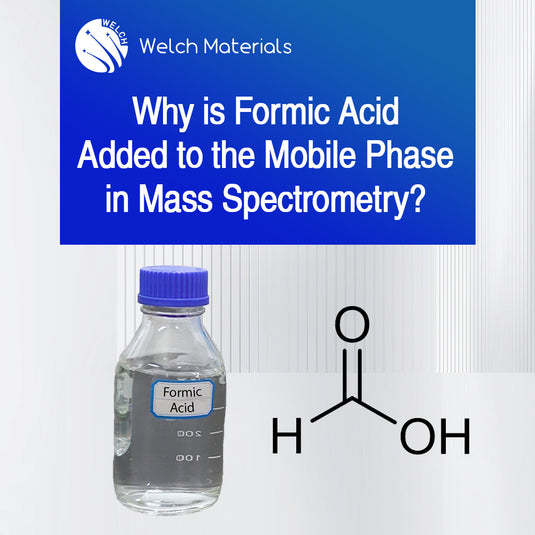

[Readers Insight] Why is Formic Acid Added to the Mobile Phase in Mass Spectrometry?
Formic acid is commonly seen added to the mobile phase in mass spectrometry methods, but have you wondered what specific role it plays, and can other acids substitute it? This article explains the role of formic acid in MS from the perspective of chemical reaction equilibrium thoroughly. -


[Readers Insight] Heterocycles Structural Analysis in HPLC Method Development
In this article, the author analyzes the structures of heterocycles (mostly aromatic heterocycles) and how the structures affect heterocycles' acid-base property. -


[Readers Insight] Choose Methanol or Acetonitrile? The Organic Mobile Phase in HPLC
In HPLC analysis, methanol and acetonitrile are the most common organic mobile phases. But have you ever thought about what exactly differentiates them? When should methanol be used and when acetonitrile? In this article, the author shares their thoughts on this matter. -


[Readers Insight] Why Do Substances with Similar Polarity Dissolve in Each Other?
In this article and attached video, the author discusses why substances with similar polarity dissolve in each other through dipole-dipole interactions, the energy change during dissolution, and the effect from entropy and Gibbs free energy. -


[Readers Insight] HPLC Column Selection: Core to Method Development (Part II)
In this article, the author shares their answers for 8 common questions in column selection, aiming to guide users in choosing the most suitable column through practical experimentation. -


[Readers Insight] HPLC Column Selection: Core to Method Development (Part I)
A chromatographic column is the heart of separation. However, with thousands of column options on the market, it is often asked how to choose "the best one". In this article, the author explains the classifications of HPLC columns and how to select the most cmpatible column for an analyte. -


[Readers Insight] Why Do Ghost Peaks Appear?
In this article, we examine the common origins of ghost peaks in HPLC. From mobile phase contamination and instrument residues, to column impurities and sample-related degradation, the article explains how they contribute to the appearance of ghost peaks. -


[Readers Insight] Is Retention Time Determined Solely by the Polarity of a Compound?
Have you ever thought about this question: In reversed-phase chromatography, does an earlier elution always mean the compound has higher polarity? Or rather — is retention time determined solely by the polarity of a compound? In this article, we explore what polarity is, why it acts as the primary factor affecting retention time, and what other factors are unneglectable.


